Fuente oficial: https://www.gob.mx/semarnat
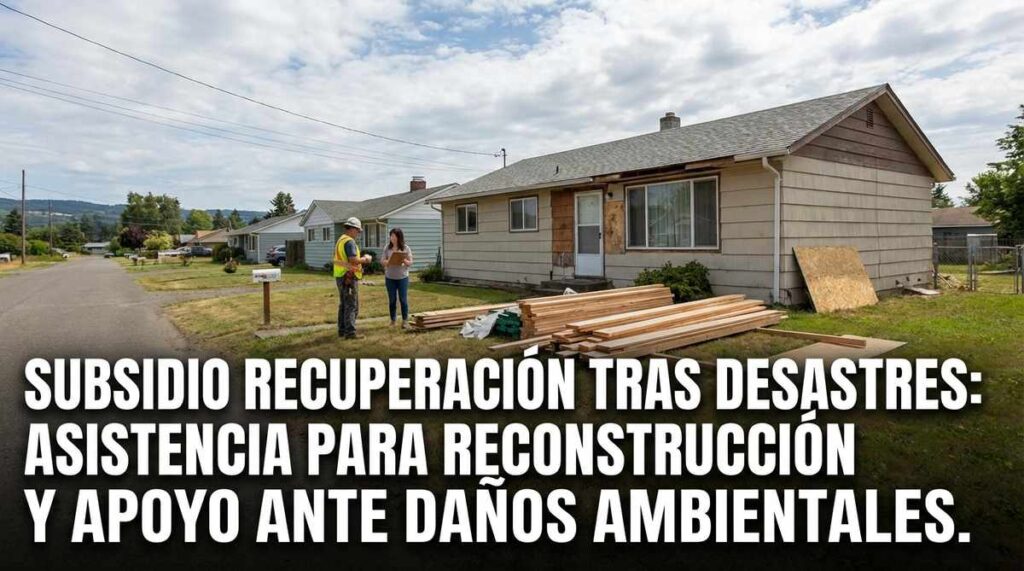
Subsidio Recuperación Tras Desastres: Asistencia para Reconstrucción y Apoyo ante Daños Ambientales 🏡
Natural disasters can leave behind a trail of destruction, impacting homes, businesses, and the environment. Fortunately, **financial assistance is often available to help communities recover and rebuild.** This article will delve into the world of disaster recovery subsidies, exploring their purpose, eligibility requirements, how to apply, and the types of support they provide. We’ll also look at specific examples and resources to help you navigate the process of obtaining the assistance you need.
¿Qué son los Subsidios de Recuperación Tras Desastres? 🤔
Disaster recovery subsidies are **financial aid programs designed to assist individuals, families, businesses, and communities in recovering from the devastating effects of natural disasters and environmental damage.** These subsidies are typically offered by government agencies at the federal, state, and local levels, as well as by non-profit organizations.
The primary goal of these subsidies is to **provide financial resources to help cover expenses related to rebuilding, repairing, and recovering from the damages caused by events like hurricanes, floods, wildfires, earthquakes, and other catastrophic events.** They aim to alleviate the financial burden on those affected, enabling them to restore their lives and livelihoods.
¿Quién Puede Beneficiarse? Criterios de Elegibilidad 🧑🤝🧑
Eligibility criteria for disaster recovery subsidies can vary depending on the specific program and the agency offering the assistance. However, some common eligibility requirements include:
- Affected Area: The applicant must reside in or own a business located within a designated disaster area.
- Damage Assessment: The applicant must demonstrate that they have suffered damages as a direct result of the disaster. This often involves providing documentation such as photographs, repair estimates, and insurance claims.
- Income Verification: Some programs may have income limitations, meaning that only individuals or families with incomes below a certain threshold are eligible for assistance.
- Legal Residency: Applicants are typically required to be legal residents of the country or state offering the subsidy.
- Insurance Coverage: Applicants may be required to have exhausted all available insurance coverage before applying for disaster recovery subsidies.
It’s crucial to **carefully review the specific eligibility requirements of each program** you are interested in applying for to ensure that you meet the criteria.
Tipos de Asistencia Disponible 💰
Disaster recovery subsidies can provide a wide range of assistance, depending on the specific program and the needs of the affected community. Some common types of assistance include:
- Housing Assistance: This may include grants or loans to repair or rebuild damaged homes, as well as rental assistance for those who have been displaced from their homes. 🏠
- Business Assistance: This can include loans or grants to help businesses repair or rebuild damaged property, replace lost inventory, and resume operations. 🏢
- Individual Assistance: This may include financial assistance to cover expenses such as medical bills, funeral costs, and other disaster-related expenses. 🚑
- Environmental Remediation: Some subsidies are specifically designed to address environmental damage caused by disasters, such as cleaning up hazardous waste or restoring damaged ecosystems. 🌳
The type of assistance available will depend on the specific disaster and the priorities of the funding agency. It is important to **research and understand the different types of assistance available** to determine which programs best fit your needs.
¿Cómo Solicitar un Subsidio? Guía Paso a Paso 📝
The application process for disaster recovery subsidies can vary depending on the program and the agency offering the assistance. However, here is a general step-by-step guide:
- Research Available Programs: Start by researching available disaster recovery subsidies offered by federal, state, and local government agencies, as well as non-profit organizations. Use online resources, contact relevant agencies, and attend community meetings to gather information.
- Assess Your Needs: Carefully assess the damages you have sustained and determine the amount of financial assistance you need to repair or rebuild your property and cover other disaster-related expenses.
- Gather Documentation: Gather all necessary documentation, such as proof of residency, insurance policies, damage assessments, repair estimates, and income verification documents.
- Complete the Application: Carefully complete the application form, providing accurate and detailed information. Be sure to answer all questions and attach all required documentation.
- Submit the Application: Submit the completed application to the appropriate agency by the specified deadline. Keep a copy of the application and all supporting documents for your records.
- Follow Up: Follow up with the agency to check on the status of your application and to provide any additional information or documentation that may be required.
Patience is key as the application process can take time, especially in the aftermath of a major disaster.
Recursos Adicionales y Dónde Encontrarlos 🌐
Numerous resources are available to help individuals, families, and businesses navigate the disaster recovery process and access available subsidies. Some helpful resources include:
- FEMA (Federal Emergency Management Agency): FEMA provides information on disaster assistance programs, including grants, loans, and other forms of support. Their website is a valuable resource for finding information on federal disaster relief efforts.
- State and Local Government Agencies: State and local government agencies often offer their own disaster recovery programs. Check with your state’s emergency management agency or your local government to learn about available resources.
- Non-Profit Organizations: Many non-profit organizations provide disaster relief services, including financial assistance, counseling, and other forms of support. Organizations like the Red Cross and the Salvation Army are often on the ground after a disaster.
- Small Business Administration (SBA): The SBA offers disaster loans to small businesses and non-profit organizations to help them recover from disasters. These loans can be used to repair or replace damaged property, equipment, and inventory.
It is crucial to **utilize these resources to gain a better understanding of the available assistance** and to navigate the application process effectively.
Casos de Éxito: Ejemplos Inspiradores 💪
Many individuals and communities have successfully utilized disaster recovery subsidies to rebuild their lives and livelihoods after devastating events. These stories serve as a testament to the importance of these programs and the resilience of those affected by disasters.
For example, after Hurricane Katrina devastated the Gulf Coast, disaster recovery subsidies helped thousands of homeowners repair or rebuild their homes, enabling them to return to their communities and rebuild their lives. Similarly, after the 2011 earthquake and tsunami in Japan, disaster recovery funds were used to rebuild infrastructure, support businesses, and provide assistance to displaced families. These are just two examples of how **subsidies play a vital role in helping communities recover**.
Conclusión: Un Camino Hacia la Reconstrucción 🛤️
Disaster recovery subsidies represent a critical lifeline for individuals, businesses, and communities grappling with the aftermath of devastating events. By understanding the eligibility criteria, types of assistance available, and the application process, those affected can access the financial resources they need to rebuild their lives and contribute to the revitalization of their communities. Accessing these subsidies is crucial for complete community recuperation.
Si deseas más información visita el sitio oficial: aquí.